Crawl Space Insulation in Sugar Land, TX
We insulate crawl spaces under raised homes so floors stay comfortable and the damp air underneath stays where it belongs.
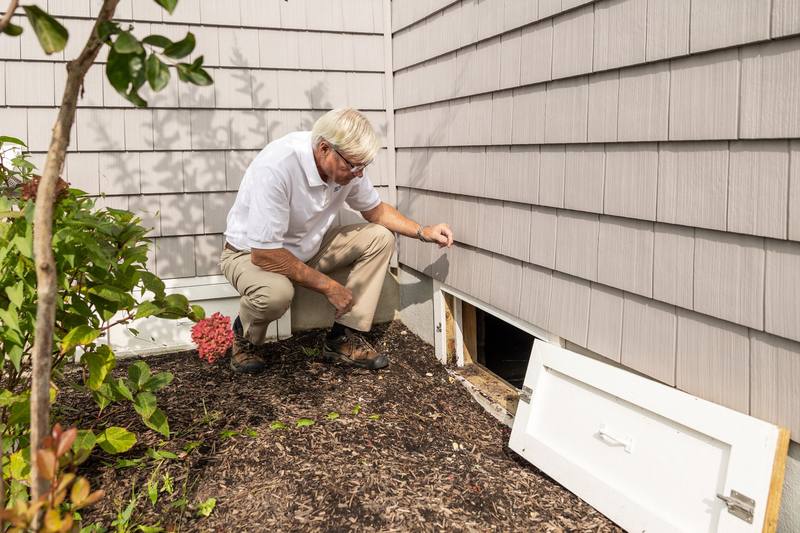
If your house sits on piers and beams, the crawl space under it affects how your floors feel and how hard your air conditioner works. We look at moisture, vents and ductwork before we insulate anything, because insulation on its own will not fix a wet crawl space. Then we tell you plainly what we would do and why.
First, check whether you have a crawl space
A lot of homes around Sugar Land are built on a concrete slab, and a slab home has no crawl space to insulate. Raised homes on pier-and-beam foundations do have one: a short open area between the ground and the floor framing, usually reached through a small access door on the outside wall or a hatch in a closet floor.
If you are not sure what you have, look at the base of your exterior walls. A row of small vents or a gap with skirting around the bottom of the house usually means a crawl space. If the brick or siding runs straight down to a concrete edge at ground level, you are most likely on a slab. In that case we will tell you so, and point you to the attic or walls if those are where your heat is getting in.
Signs the crawl space is causing trouble
Crawl space problems tend to show up in the rooms above them rather than under the house. These are the things homeowners usually notice first:
- Floors that feel cold in winter, especially near exterior walls
- A musty smell that gets stronger after rain
- Fibreglass batts hanging down or lying on the ground under the house
- Ductwork in the crawl space dripping water in summer
- Cupping or soft spots in wood flooring
- More bugs or rodents than you would expect indoors
- Rooms over the crawl space that are hard to keep cool
What usually causes it
In our part of Texas, the main problem in most crawl spaces is moisture, not cold. Warm, humid outdoor air comes in through the foundation vents and meets the cooler surfaces under the house: the floor framing, the duct runs, the underside of the subfloor. When that air cools, the water in it condenses. Over a summer, that dampness soaks into the insulation and the wood.
Fibreglass batts are the most common insulation we find under raised homes, and they do not cope well with this. Wet batts get heavy and sag away from the floor, leaving a gap that does nothing. Wire supports rust and let go. Pests nest in the material and pull it down. Once a batt is hanging, it has stopped working, even though it still looks like insulation from the access door.
Bare ground makes it worse. Soil gives off moisture all the time, and without a vapour barrier on the ground that moisture goes straight into the air under your floor. Poor drainage around the house, gutters that empty next to the foundation, or a low spot where water collects after heavy rain all add to it.
Two ways to insulate a crawl space
There are two main approaches, and the right one depends on how your crawl space is built and how wet it gets.
Insulating the floor above a vented crawl space
Sealing the crawl space and insulating the walls
When to repair, top up or replace
If the existing insulation is dry, still tight against the floor and only missing in a few spots, it can sometimes be patched and re-supported. That is rare under a raised house in this climate, but we will say so when it applies.
More often, the old batts are damp, compressed or full of droppings and need to come out. Leaving wet or contaminated insulation in place and adding new material over it traps the moisture against the wood. We remove the old material, check the framing for rot or mould, and deal with anything that needs fixing before new insulation goes in.
If we find water coming in, a broken duct or a plumbing leak, we will point it out first. Insulating over an active leak only hides it until it causes more damage. Some of those repairs are outside our trade, and we will tell you when you need a plumber or a foundation contractor instead.
What a visit involves
We start by going under the house. We look at the ground cover, the vents, the condition of the floor framing and any insulation already in place. We check the ductwork for sweating, gaps or loose connections, and note any signs of pests or standing water. We also look at the access point, because a tight access hatch affects how the work can be done.
Afterwards we walk you through what we saw, ideally with photos so you do not have to crawl under there yourself. We explain which approach we would recommend and why, and what it would involve. If the crawl space is in good shape and does not need much, we will tell you that too.
On the day of the work, removal of old material comes first, then any vapour barrier, then the new insulation. Spray foam needs time to cure, so we will let you know how long to keep people and pets away from the area and when to run your air conditioning normally again.
What is specific to Sugar Land
Sugar Land and the towns around it sit close to the Gulf Coast, so summers are long, hot and very humid. That humidity is the main reason vented crawl spaces here struggle. Insulation details that work fine in drier parts of the country often fail here within a few years.
The area also gets heavy downpours, and the clay-heavy soil common around Fort Bend County drains slowly. After a big storm, water can sit near the foundation and seep under a raised house. Before insulating, it is worth checking that your gutters, downspouts and grading move water away from the house. If your crawl space has flooded before, tell us, because that changes which materials make sense.
Winters in Sugar Land are mild, but cold snaps do come through. A well-insulated floor and sealed gaps around pipes help keep the rooms above comfortable and give exposed plumbing under the house some protection when temperatures drop.
FAQ
Common questions about crawl space insulation
No. A slab home has no crawl space, so there is nothing to insulate there. If your rooms are hard to keep comfortable, the attic or exterior walls are the more likely places to look, and we can check those instead.
It depends on which approach you choose. If we insulate the floor, the vents usually stay open. If we seal the crawl space and insulate the walls, the vents get closed and the space needs a way to keep the air dry, so closing vents on their own without the rest of that work is not a good idea.
New batts under a humid, vented crawl space usually end up the same way as the old ones: damp, sagging and pulled down by pests. Closed-cell spray foam bonds to the floor and does not absorb water, so it holds up better in this climate. If batts really are the right fit for your house, we will tell you.
Yes. Damp or contaminated insulation should come out before anything new goes in, so moisture is not trapped against the floor framing. Insulation removal is one of the services we offer, and it is usually part of a crawl space job.
Yes. We also work in Missouri City, Stafford, Richmond, Rosenberg, Katy, Pearland, Bellaire and Fulshear. Call (281) 010-0001 or request an estimate and tell us where the house is.

Get Started
Tell us about your attic or building
Call (281) 010-0001 during business hours or send a note through the form. Tell us what you have noticed, such as hot upstairs rooms, high summer bills or damaged insulation, and we will arrange an inspection and a written estimate.