Wall Insulation in Sugar Land, TX
We insulate the walls of existing homes and open walls during remodels, so the rooms that stay hot all summer stop working against your air conditioner.
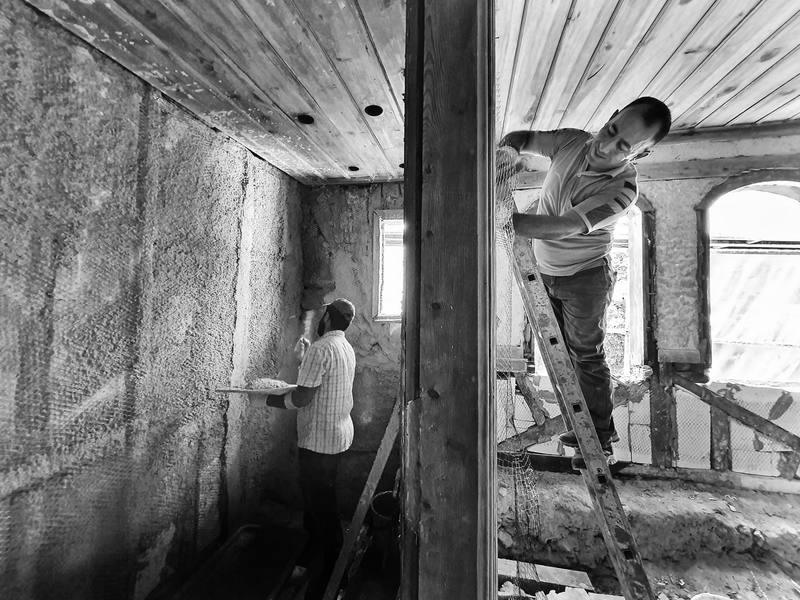
Most homes in Sugar Land have some insulation in the exterior walls, but it is often thin, short or missing in places. We find out what is actually inside your walls, then fill them with blown-in insulation or spray foam, depending on whether the walls are closed or open.
Signs your walls are not doing their job
In Sugar Land, the walls that cause trouble are usually the ones facing west or the ones shared with the garage. You notice it in the late afternoon. One bedroom stays warm long after the rest of the house has cooled down, or the air conditioner keeps running and the room never quite catches up.
Here are a few things worth checking yourself:
- The inside of an exterior wall feels warm to your hand on a summer afternoon.
- One room is always a few degrees warmer than the rest of the house.
- You feel air moving at outlets or switch plates on exterior walls.
- A bedroom beside or above the garage is uncomfortable most of the year.
- Your attic has already been insulated, but the cooling bill is still high.
What usually causes it
Many homes in Fort Bend County went up quickly during building booms. Wall batts were sometimes cut short, squashed around wiring and plumbing, or left out entirely behind tubs, fireplaces and stairwells. Over the years, fiberglass batts can slump in the cavity and leave a gap at the top of the wall. Mice and rats nest in them too, and a nest leaves a hollow behind.
Most local homes are brick veneer over a wood frame on a slab. The brick soaks up afternoon sun and keeps releasing heat into the evening. If the cavity behind the drywall is thin or empty, that heat comes straight into the room.
Air leaks matter as much as the insulation itself. Gaps at the top plate, around pipes and wires, and where walls meet the attic let hot, humid air move through the wall. Fixing the airflow is often half the improvement.
Your options: closed walls and open walls
Which method we use depends mostly on whether the drywall is staying up.
Closed walls in a finished home
Open walls during a remodel or addition
When to add, when to remove, when to leave it alone
If a wall already has batts that are dry and mostly in place, blowing more insulation in around them usually does not help much. In that case we will say so, and we may point you to the attic or to air sealing, where your money will do more.
If the cavities are empty, or the insulation has fallen to the bottom of the wall, blown-in insulation makes a real difference. If the insulation is wet, moldy or full of rodent droppings, it has to come out first. This is common after a roof leak, a plumbing leak or storm flooding. Wet insulation stays wet against the studs and the drywall, so we take it out, let the wall dry and start fresh.
If you are already opening walls for a kitchen or bathroom remodel, that is the cheapest time to get the insulation right. Pulling out old batts and spraying foam in an open wall costs less than doing it once the drywall is back up.
What a visit involves
A visit is fairly simple. Here is the usual order:
- You tell us which rooms bother you and when you notice it most.
- We walk through the house and look into exterior walls at outlet and switch boxes. If needed, we drill a small test hole so we can see what is in the cavity.
- We look in the attic, because a thin attic is often the bigger problem and is cheaper to fix.
- You get a written estimate that lists which walls we would do, the method and the material.
Wall insulation in Sugar Land and nearby cities
In this area the cooling season runs from spring well into fall, and the humidity stays high even at night. That puts steady pressure on exterior walls, especially in two-story homes where heat builds up upstairs. Wall insulation helps more here than most people expect, as long as the attic and the air leaks are dealt with too.
Older homes closer to Houston tend to have thinner or missing wall insulation. Newer builds further out usually have batts, though install quality varies from one house to the next. We work in Sugar Land and in Missouri City, Stafford, Richmond, Rosenberg, Katy, Pearland, Bellaire and Fulshear. If you have a room that never cools down, call us and we will come and see what is inside the wall.
FAQ
Common questions about wall insulation
Yes. For finished walls we drill small holes in each cavity between studs, pack insulation in through them, then patch the holes. The patches are ready for paint, and your drywall and trim stay where they are.
It depends on whether the wall is open. Blown-in is the practical choice for closed, finished walls. When the studs are exposed during a remodel or repair, spray foam usually performs better because it seals air leaks as well as insulating.
In most Sugar Land homes, the attic comes first. It takes the most direct sun and is usually cheaper and easier to fix. We check both on a visit and tell you which one will do more for your house.
If your walls are empty or poorly filled, it usually helps with comfort and with how long the air conditioner runs. How much it helps depends on what is in the walls now and on the condition of your attic and ductwork. If we don't think the walls are the problem, we'll tell you.
Usually not. Wet insulation holds moisture against the studs and drywall, and that can lead to mold. We remove it, let the wall dry out and then put in new insulation.

Get Started
Tell us about your attic or building
Call (281) 010-0001 during business hours or send a note through the form. Tell us what you have noticed, such as hot upstairs rooms, high summer bills or damaged insulation, and we will arrange an inspection and a written estimate.